
Athletes often ask us what is better to do in high-intensity, high-tension situations: to vent the frustration outward or to keep it inside?
Reactions to Frustration
Is it better and easier when we vent “all” the frustration caused by a certain mistake or a referee’s decision?
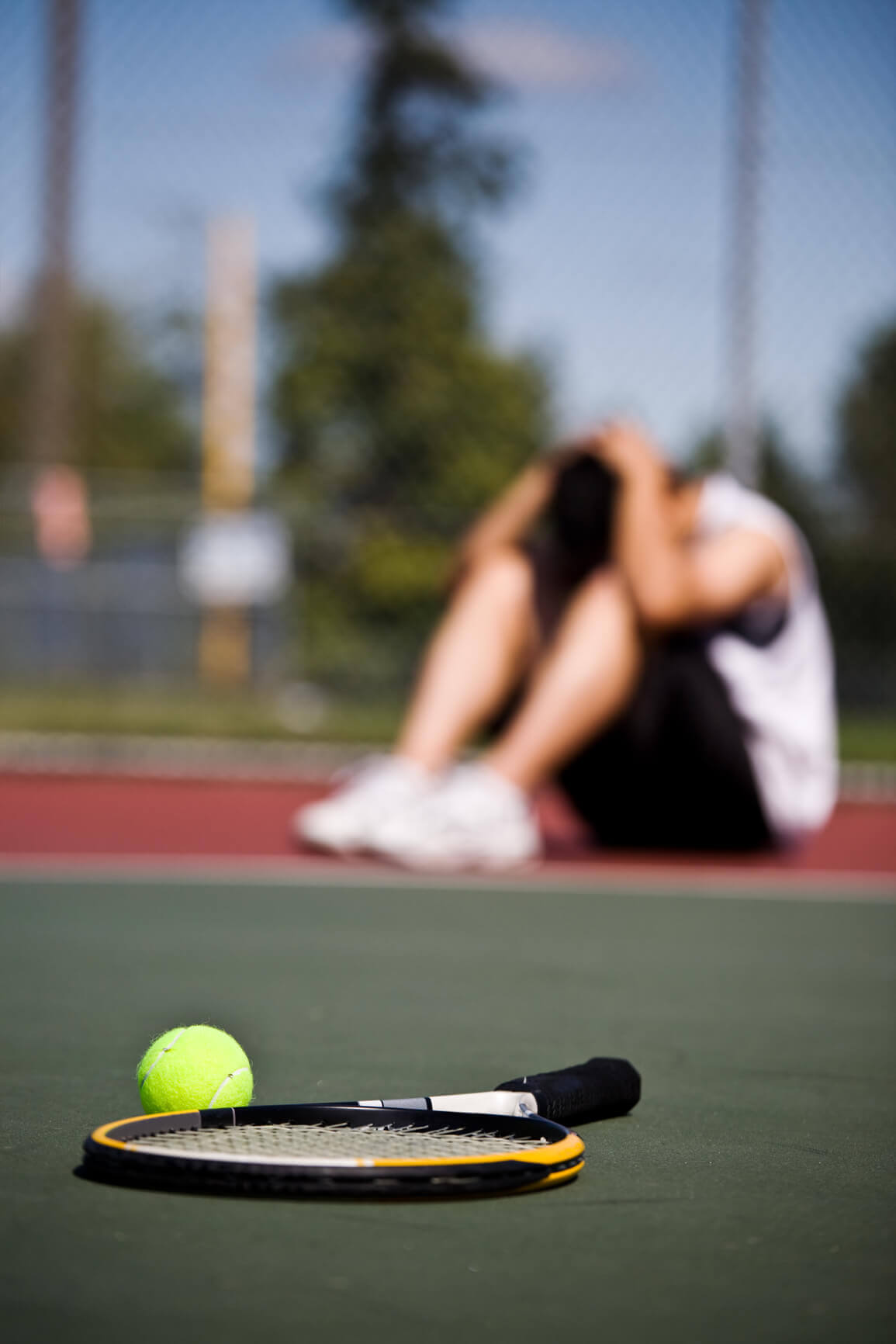
Or by losing a point, do we release it out of our body, or when we try to suppress, to “swallow” the emotion? Externally, athletes react in various ways: by swearing, loudly arguing with themselves or teammates/referees, or throwing or hitting certain objects. Sometimes they even use their own body or parts of their equipment. In some sports, these external reactions to frustration are more visible. Well-known examples include tennis players who smash rackets or a soccer player who kicks the advertising boards along the pitch.
Suppressing or attempting to “swallow” the emotion is not as visible to us because athletes try to look cool on the outside even though they are burning with emotion on the inside. This is an eternal question to which there is no easy answer as to whether the first or second option is better.
Focus and Frustration
What happens to the focus of a tennis player who throws or smashes a racket? What happens to the focus of a football player who, dissatisfied with a referee’s decision, kicks the ball into the stands?
A loss of concentration occurs, the game plan is lost from thought, and focus points disappear. Similar symptoms appear in an athlete who wants to suppress their emotions so as not to show them outwardly, but burns with negative arousal inside. Venting frustration outward has the effect of temporary relief, but in the long run, it does not help the athlete improve. Also, if we want to be sure that we will react negatively every single time, we only need to practice reacting negatively.
After a certain number of repetitions, our brain will choose that reaction every time as the customary response. The consequence of a lack of concentration is more frequent mistakes, and then very quickly we can enter an excellent vicious cycle: mistake – negative reaction – decreased concentration – mistake.
Substitute Reaction
What we try to convey to our athletes is the third option – replacement reactions to frustration.
Substitute reactions are formed so that athletes can react in a high-quality way when something happens that they themselves evaluate as bad and that puts them into a state of negative emotions. When we talk about reacting well, we want the athlete to remain focused on the task and to “reset.” Therefore, substitute reactions serve the purpose of prevention (so that high frustration does not occur at all), but also of reducing current frustration.
Examples of Substitute Reactions to Frustration:
- directed movement – we repeat the movement we made just a moment ago, but this time correctly. If a tennis player hit the last forehand incorrectly, then before the start of the next point, they “execute” a few more forehands without a ball. This time, exactly the way they intended the first time. What lies behind this is that the brain remembers the last movement we just performed exactly as it should be, rather than the mistake we made.
- delayed reaction – often, if we delay a negative reaction just a little bit, it is already enough to prevent us from doing something reckless and stupid. We tell athletes that when they already feel such a level of frustration that they feel they must react badly, they should just count from 10 to 1 before doing so. If they still want to react negatively, go ahead… but that rarely happens.
- shake it off – imagine that all the frustration accumulated in your body is like snow on your raincoat. Now jump up and down a few times, shake out your arms, legs, and head, and imagine all the tension falling away from your body.
- giving the situation a funny name – the principle on which this exercise works is shifting from negative to positive. If you say to yourself: “I’ve turned green like the Hulk,” you might manage to laugh in that moment and shift your focus back to what helps you get into a better zone.
- self-irony – probably the hardest substitute reaction. This one is definitely not for everyone, especially for those athletes who insult themselves in this manner while they are in the red zone. However, some athletes manage to laugh at themselves or even mock themselves. So someone might say: “Bravo Marko, great pass, just like a soccer international from Andorra :)”
After each substitute reaction, the focus shifts to the present, to the here, to the plan, to the ritual, or to the focus points. As we said, the goals of substitute reactions are prevention so that high frustration does not even occur, or when an athlete finds themselves in that situation, to react a bit differently and with higher quality.
Just like for any skill, this one takes time as well, especially if you have spent years teaching your brain to react the wrong way.