

The Practicum is for psychologists and psychology students who want to understand what working with athletes involves, or who are already working in a sports context and want practical tools. It delivers methods and examples from real practice, not just a theoretical framework.
The Practicum runs in small groups across multiple sessions. For information on the next date and format, contact us directly.
Why does this training exist?
Sport psychology in Croatia lags behind the rest of Europe — not because there is a lack of interested psychologists, but because there are not enough structured entry points into the profession.
The MT Practicum is one of those entry points. It was built on a simple idea: psychologists already know the theory, so give them the practice.
“We are not creating competition, but a support system. We want a community of sports psychologists who help each other, share experiences and push forward together.”
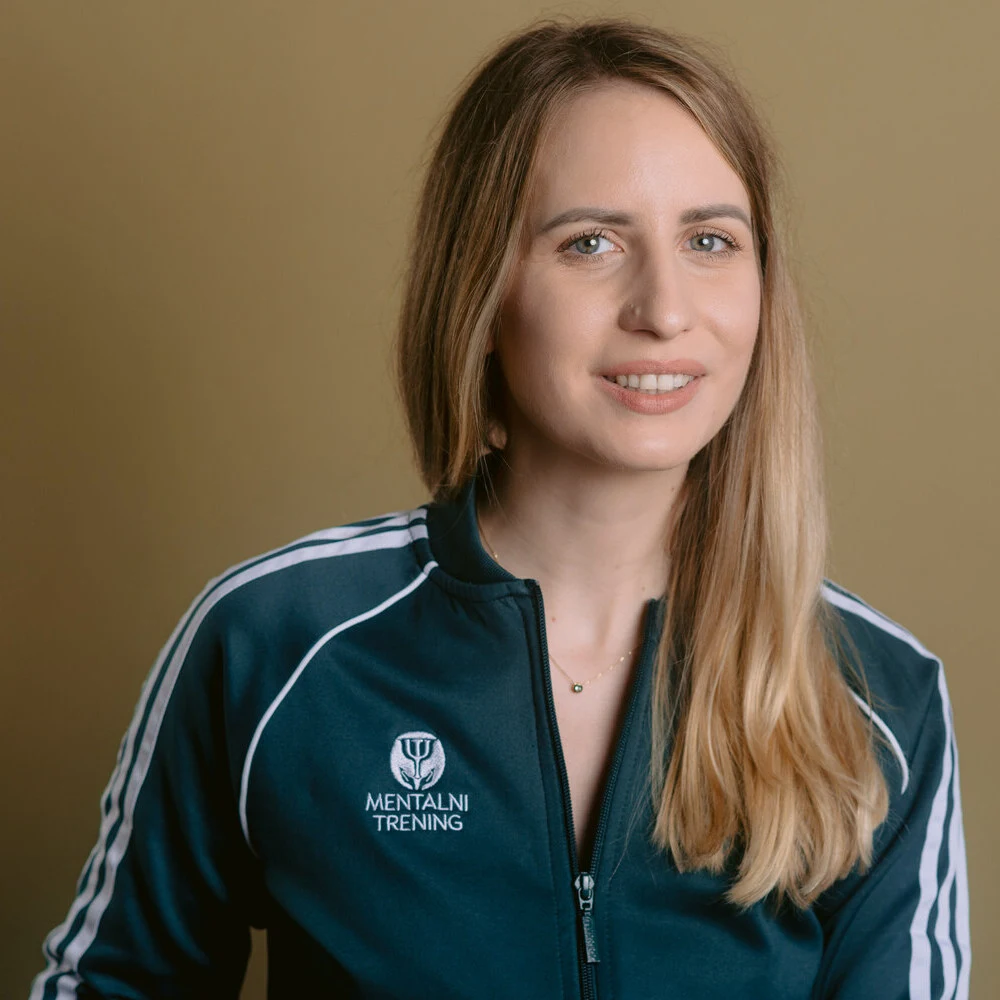
— Sanja Vrančić, sports psychologist, Mentalni Trening
Three-module education program: Motivation, Concentration, and Emotional Management.
The lecturers are active sports psychologists who work with athletes every day, not theorists who describe what the work should look like.
The practicum is not an education for obtaining a sports psychologist’s license, which is regulated by the Croatian Psychological Chamber and a special permit. It is a practical insight into the methods and specifics of working with athletes, intended for psychologists who are already licensed or are in the process.
3 modules: Motivation | Concentration | Emotion Management
A little theory, a lot of practical examples and exercises
Demo sessions in which we simulate real work with an athlete
Small groups, individual approach and space for open questions
Available live in Zagreb and online
Certificate of attendance
Each module has a theoretical introduction, but that takes up about 20% of the time. The rest is demonstrations, exercises based on your own experience, and work on specific cases. If you’ve ever wondered during the training how to actually apply all of this in your work, this is the answer to that question.
Luka, Sanja and Dora don’t teach theory. They teach based on 15+ years of experience working with athletes. Stories, lessons learned, situations that didn’t go according to plan and how to resolve them. That’s knowledge you can’t get anywhere else.
The number of participants is intentionally limited. Not for the sake of exclusivity, but because this kind of education requires a real conversation, not a frontal lecture. You have space for questions, for your own dilemmas and for feedback on specific cases.
During the Practicum, you have the opportunity to try out biofeedback and other technologies that sports psychologists use in their daily work. Reading about a method is one thing, but experiencing what an athlete goes through and feels is quite another.
Who is the Practicum for?
"We had a small group so that each participant could discuss the topics individually. You made sure to create a good balance between the lecture and the interactive part. There was space for personal engagement and reflection on the presented concepts through the tasks you gave us during the modules and as homework between modules. The modules were clearly presented in a way that was understandable to both the layperson and the psychologist, or psychology student."
"The entire practicum was permeated with numerous practical examples that can greatly contribute to working with athletes, but the techniques and exercises can also be applied to working with other groups. In addition to specific examples that athletes encounter, I am glad that you selflessly shared how you solve such problems. The small group of participants allowed the lecturers to answer all the questions asked and to actively guide us during the exercises. The lecturers were engaged, maximally involved, and created and maintained a pleasant atmosphere. Clear, practical, and educational!"

"This training here is completely different because it's a mix of a little theory and a lot of practical knowledge, because people here get something they can use right away at the next training."
"I am extremely satisfied with the entire practicum, the way it was organized, and the way you conveyed your knowledge, both theoretical and practical, to us. You are extremely nice and pleasant lecturers. It's great that you encouraged communication during the lecture and asked for our opinions. I think I received a lot of useful advice that I am already applying to myself as an athlete, and I plan to use it outside of sports as well."
"I attended the Mentalni Trening training/practicum for psychologists a few years ago. I have always been interested in sports psychology, which I studied abroad, and upon my return to Croatia, I had the opportunity to participate in this training and see how my fellow psychologists do it here. Luka and Sanja demonstrated excellent knowledge and, through very interesting workshops with numerous practical examples and exercises, introduced the participants to the issues of motivation, concentration, and emotions in sports. I would recommend this training to all fellow psychologists with an interest in sports psychology who want to learn to apply their profession through practical examples."
"I would really recommend the Practicum for psychologists to anyone who wants to work in this field! Luka and Sanja are excellent lecturers who answered every question clearly, with plenty of practical examples, and the exercises we went through during the practicum itself are excellent and simple - so much so that I used them on myself on several occasions and I must admit that they really helped me a lot. There is little theory, most psychologists know from their education, but everything that is mentioned during the practicum is also tried out. You quickly get the impression of how easy or difficult something is to do. Excellent concept, and even better implementation!"

The training takes place at the Mentalni Trening office in Zagreb. In addition to the content, you also see what the space looks like where the psychologist works with athletes, which in itself carries a lot of information.
The same content, completely online, adapted for those who cannot come to Zagreb. The interactivity remains the same because the small group means that even the online format does not become passive viewing of slides.
The Practicum runs in small groups across multiple sessions. For information on the next date and format, contact us directly.
The most common questions we hear from fellow psychologists before they sign up for this Mental Training Practicum. If your question is not here, contact us directly.
No. The Practicum is designed for both beginners and those with experience. If you have no experience, you get a structured introduction to the work. If you do, you get the space to put it into context and build on it.
Yes, all participants receive a certificate of attendance. It is not a substitute for a sports psychologist license in Croatia, which is obtained through a special chamber program, but it is proof of specific education and can be added to your portfolio.
Yes. The topics are similar, but the approach is different. With coaches we assume that they don’t know psychology, and with psychologists we assume the opposite. The focus is on how and when to use certain psychological tools in a sports context.
Yes, and that’s one of the reasons why we intentionally keep the groups small. We build a relationship with you and we’re not just here to transfer knowledge, but to collaborate with each other. Questions are welcome even after the training is over.
Yes, by appointment. If you have a group of six or more interested participants, we can come to you or organize a separate online appointment.
The Practicum consists of three modules held over three periods. The exact schedule for the next group will be sent with the registration confirmation.
Psychology students often make up a large portion of each group. The Practicum gives you a concrete insight into what sports psychology looks like in practice, which is also useful when deciding on further specialization.
Sports psychology is becoming increasingly important and the demand is growing. Be part of that change.
"*" indicates required fields
We’ll get back to you soon.