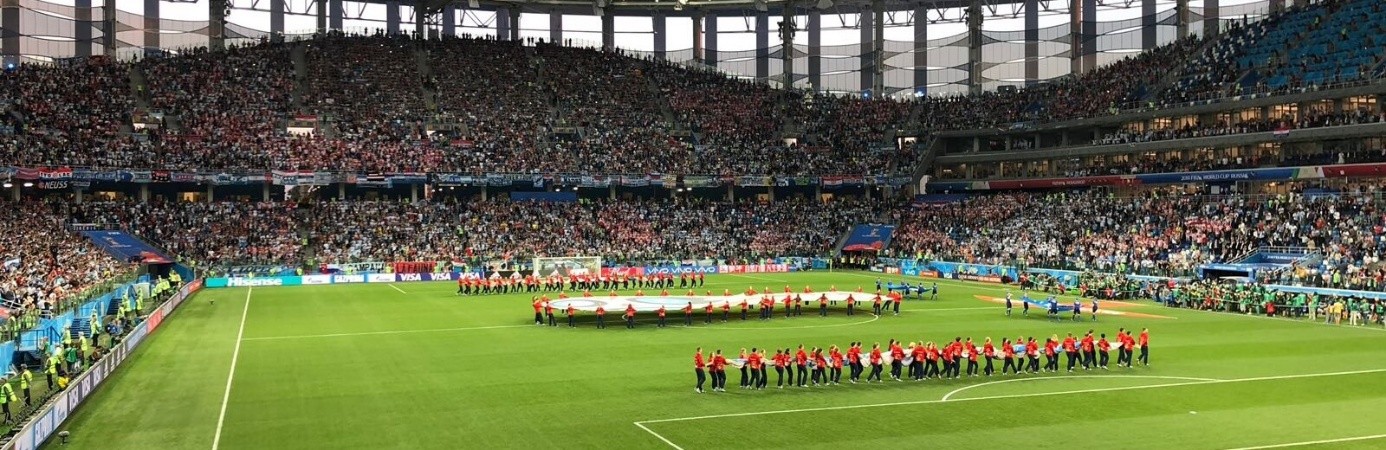

Why Do We Get Anxious Over Games We Don’t Play?
If you have ever turned off the TV at halftime because the tension was simply too much to handle, found yourself pacing nervously around the room in the middle of a match, or spent days in a bad mood after a national team loss – you are not alone. And no, you are not overreacting. This is a real physiological response by your body to a perceived threat to an outcome that matters deeply to you.
There is an official term for this phenomenon: fanxiety. It is a specific combination of cheering and anxiety that occurs in people who are deeply emotionally invested in the sports they follow. Fanxiety is not a mental disorder, nor is it a sign of weakness. However, it can seriously compromise your enjoyment of the game, and in more intense forms, negatively impact your quality of life during major tournaments.
Why Does Fanxiety Happen in the First Place?
Our brain does not distinguish between a threat directed at us personally and a threat to a group we identify with and care about. When the team you root for loses possession and finds themselves in a risky situation, the exact same evolutionary system that reacts when you are in physical danger gets activated.
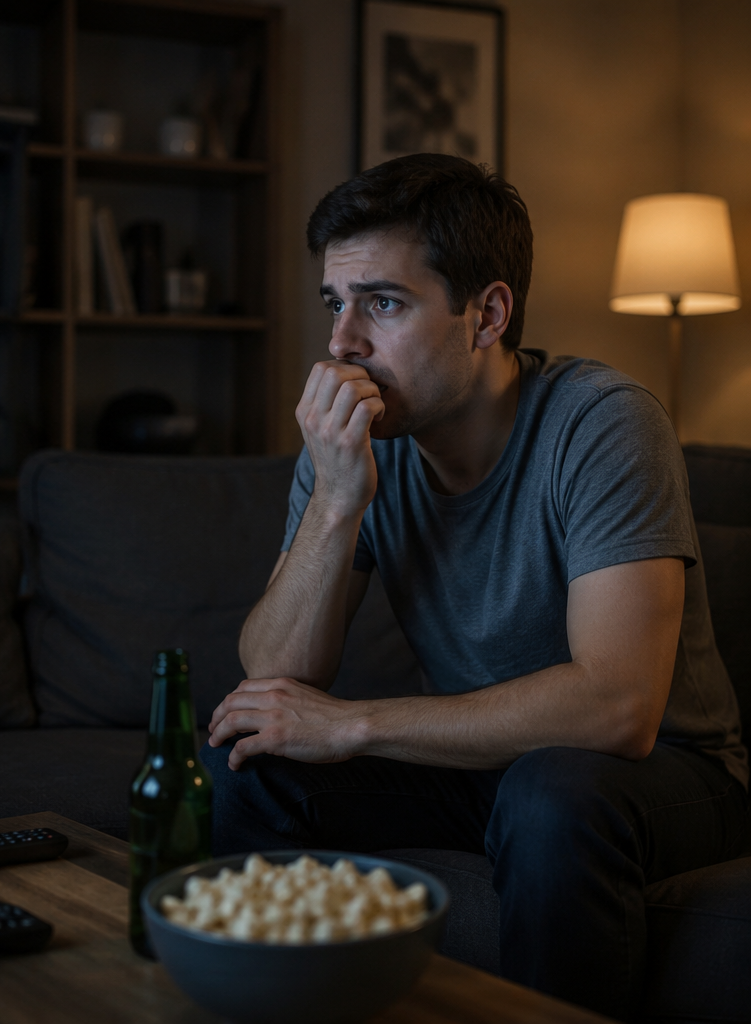
Your heart rate spikes, muscles tense up, sweat breaks out, and your focus narrows. The body prepares for action to overcome the threat. However, the catch is that you are sitting in front of a screen, completely unable to do anything to make the danger go away.
This is where the short circuit happens. Stress accumulates, but physical action is absent. The more important the competition, the longer it lasts, and the more the final score matters to us, the greater the accumulation of tension becomes.
An Insight from Practice: Elite athletes often point out that it is far more stressful to watch their teammates from the bench or on a screen than it is to actually be out there on the field.
This is because when they are on the field, they have control. A lack of control leads to increased anxiety and stronger physiological symptoms – and this lack of control is the very core of fanxiety. When we have control, our brain can act; it can create a plan, adapt, and react. When there is no control, as is the case with cheering, a powerful arousal response is triggered but has no logical outlet. The tension remains trapped inside us and can completely overwhelm us.
What Signs Should You Look Out For?
Fanxiety does not always manifest as typical anxiety or panic. In everyday life, it most frequently looks like this:
- Irritability an hour or two before the game for no apparent reason.
- Restlessness and the inability to sit still while the game is on.
- Overanalyzing referee decisions and team tactics hours (or even days) after the final whistle.
- Difficulty sleeping and insomnia following evening matches.
- A feelings of emptiness or sadness that lingers for days after a loss that, objectively speaking, is not your personal failure.
If you regularly notice these symptoms in yourself, it is time to incorporate elements used in applied sports psychology into your fan routine.
Practical Steps to Manage the Stress
1. Separate what you control from what is out of your hands
This is not just abstract advice. Before every game, consciously set boundaries in your mind.
- You control: where you watch the game, with whom, what you eat, and whether you put your phone away.
- You DO NOT control: referee decisions, player injuries, the team’s form on game day, or VAR reviews. Every time you catch yourself raging over a bad call, mentally tell yourself “STOP” and consciously shift your focus back to things within your domain.
2. Add physical activity to your match day
If you move around before a game, your body will “burn off” a certain amount of accumulated tension in advance. This means it will react more slowly and mildly to the stress of cheering. A short, brisk walk before kickoff is more than enough.
3. Use halftime to deliberately calm your body down
Halftime is not just for the athletes to rest—it is essential for the spectators too. If you feel highly tense, do a quick breathing exercise. A few slow, deep exhales (making the exhalation consciously longer than the inhalation) instantly activates the parasympathetic nervous system, which calms the body down. Just 30 seconds of mindful breathing away from the screen makes a huge difference.
4. Monitor what you eat and drink during the game
Caffeine and alcohol naturally heighten the body’s physiological responses to stress. If you drink strong coffee or beer during a tense match, your body is already in a state of heightened arousal before the game even becomes unpredictable. Consider swapping them for water or herbal tea if you find that fanxiety is taking over.
5. Give yourself permission to just turn it off
Watching a match until the very last second is not a legal obligation. If you notice that a game is seriously damaging your mood, health, and sleep, you have every right to turn off the TV and check the highlights later. This is not a lack of loyalty to your team; it is smart mental preparation and proper self-care.
6. Post-loss: Set a time limit for dwelling on the game
Allow yourself a specific window – for instance, one hour or until the end of the evening – to actively think and talk about the game. Once that time is up, intentionally change the subject. Remind yourself that you are under no obligation to carry the weight of a result that is not actually yours.

Final Thoughts
Following a sport and rooting for a team you love means accepting that you will occasionally be emotionally shaken up. It is an inseparable part of sports passion. However, there is a massive difference between an emotion that naturally comes and goes, and one that consistently disrupts your daily routine and sours your long-term mood.
If you recognize that cheering is draining you too much, it is worth taking these steps. The goal is not to stop cheering, but to ensure that sports remain an activity you enjoy and feel energized by, rather than one that leaves you emotionally and physically depleted.
—
To learn more about how sports psychology and structured mental preparation can help not just athletes but everyone in their ecosystem, feel free to explore our website or contact us directly via email.