

The following article focuses on practical advice for coaches on how to establish a high-quality relationship with parents.
An Extremely Important Relationship
In youth categories, parental influence is highly pronounced, and parents are frequently involved in the overall operation of the club.
Dear coaches, how many times have you had, to say the least, difficulties with parents? How many times have you worried more about the parents than having the opportunity to dedicate yourself to the technical and tactical demands of training? Anyone who has not recognized themselves in these situations at least once can feel free to stop reading this article. Also, please send us your recipe via email, because you are one of the few who possess the magic formula. 🙂
Communication with Parents
Since we are in constant contact with a large number of coaches, we have created a list of things you communicate to us that you want (or do not want) in your relationship with parents.
I want:
- A good relationship with parents;
- Help from parents;
- Parents to know that I understand their role and importance;
- A partnership;
- To give parents a sense of importance;
- To help parents and teach them how to be the best support for their child;
- Trust from parents.
I do not want:
- To underestimate parents;
- To focus only on the negative characteristics of parents;
- To resent parents;
- To remove them completely from their child’s sport;
- To be constantly available to parents;
- Constant interference in my work;
- To explain the same things “a hundred times.”
Both lists are quite demanding, but every item has its continuation, just as every coach has their own story with parents.
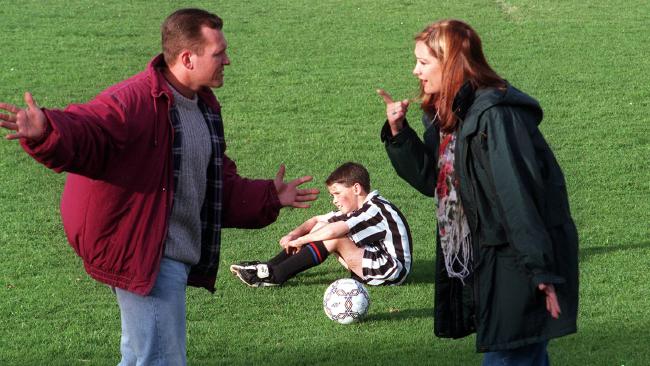
If we had to point out just one thing, it seems to us that the biggest problem for you coaches is that parents sometimes “play“ the coach, the referee, and the parent. All in one. We often hear from you how parents prevent you from doing your job well. “They think they know my job better than I do.” Parents and coaches are the most important people in a child’s sporting development, and it is necessary for them to be in a positive relationship and work as partners. We can freely say that they are the most important figures, especially in the early categories.
What most parents are not aware of is that they do not only have rights, but they also have obligations, mostly toward their child. Obligations to give the child the freedom to enjoy training, to give them the opportunity to learn everything they can from the coach they chose and whom they pay. The biggest obligation parents have is to be a support to their child no matter what.
Establishing a Good Relationship
We believe it is in your interest to establish the best possible relationship with parents, so try these 3 simple steps.
- Step: Education
The first thing you can do regarding parents is try to educate them about the psychophysical development of their child and the demands they can handle at that developmental age. Teach them to be moderate when talking to children about sports, and to refrain from giving practical technical and tactical advice, because that is your part of the job. Also, if they cannot refrain from giving criticism, let it not be of a general nature: “You didn’t play well,” “I’m not satisfied with today’s training,” because children do not receive information on which part they need to fix from that. Giving criticism is also your part of the job.
Explain to parents that the greatest way they can help their child is precisely by giving honest support, praising effort when it is shown, and cheering during the activity.
- Step: Tasks
Something else you can do is assign specific tasks to parents. What they want most is to be involved. Agree with parents for each game on what duties each of them has. The most important thing of all is to communicate with parents rather than leaving them sidelined, because that only increases the rift between you and them. In the end, the one who suffers the most is the child you coach.
- Step: Rules
Set rules. We said that parents have both rights and obligations toward you and their children. Organize a parent meeting, preferably at the beginning and toward the end of the season, and together with the parents, establish rules of work and behavior that everyone will respect.
Examples of Rules:
- CHEERING – At competitions and in training, the coach takes the lead, and parents cheer for their children.
- COACHES TAKE THE LEAD – Coaches are the first, and preferably the only ones, to comment on technique and tactics because they are educated for it.
- PARENTS PARTICIPATE, BUT PASSIVELY – For example, parents record and take as many pictures as possible so that you can make an album at the end of the season, and they help with the organization and implementation of competitions if necessary.
- KEEPING AGREEMENTS – Coaches and parents stick to the agreed training and competition schedules, and no one has the right to be late; if they are running late, they notify in time.
- COACH AVAILABILITY – The coach is available for conversation and meetings at a precisely designated time of the week, and not every time the parents would like it.
Try to agree on rules that both you and the parents will agree with, and what you must pay the most attention to is that these rules are in the best interest of the children and what is best for them. Arrange regular meetings and revise these rules. Also, provide parents with feedback on their children’s progress to satisfy their need for involvement and information. Keep in mind at all times that the children you coach always come first!
P.S. For more advice, you can contact us for a free info meeting or attend our education for coaches!