
Your child trains three times a week, goes to competitions on weekends, and you sit on the bench or in your car, wondering if you are doing the right thing. The short answer: you are doing the right thing, as long as sports remain a source of joy for your child. This is the benchmark that is easiest to lose sight of in the rush of expectations from the club, coaches, parents, and the child themselves.
A child who first stepped into a gym or onto a field at five or seven did so because running, playing with a ball, and being part of a team was fun. That joy is the reason sports make sense at that age, and it should remain the benchmark even when competitions become more serious and results more visible. A parent who keeps this reason in focus more easily recognizes the difference between healthy progress and pressure that has built up unnoticed.
Development and fun come before results
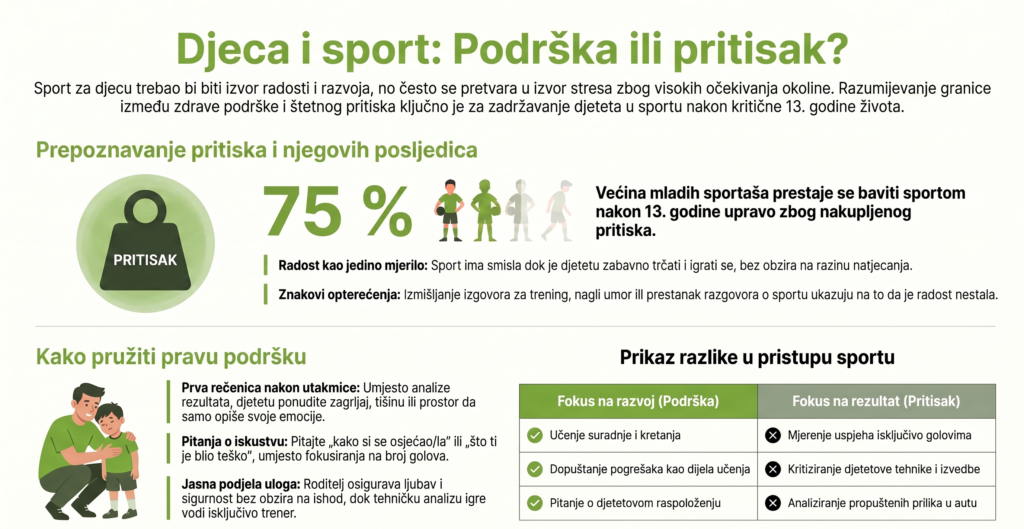
For children and young athletes, the goal of training differs from senior sports. A child training in soccer, swimming, or tennis between the ages of eight and fourteen is primarily learning how to move, collaborate with others, and handle winning and losing. The result comes as a consequence of that process. When parents and clubs measure success solely by the number of goals or rankings, children learn that their worth is tied to their last result – a fragile foundation for self-esteem and a healthy relationship with sports. Just how fragile this foundation is is highlighted by the statistic that 75% of children quit sports after the age of 13.
Coaches and parents have different roles but share the same responsibility: keeping sports a place where children can make mistakes, learn, and above all, enjoy what they do.
What to ask after a competition
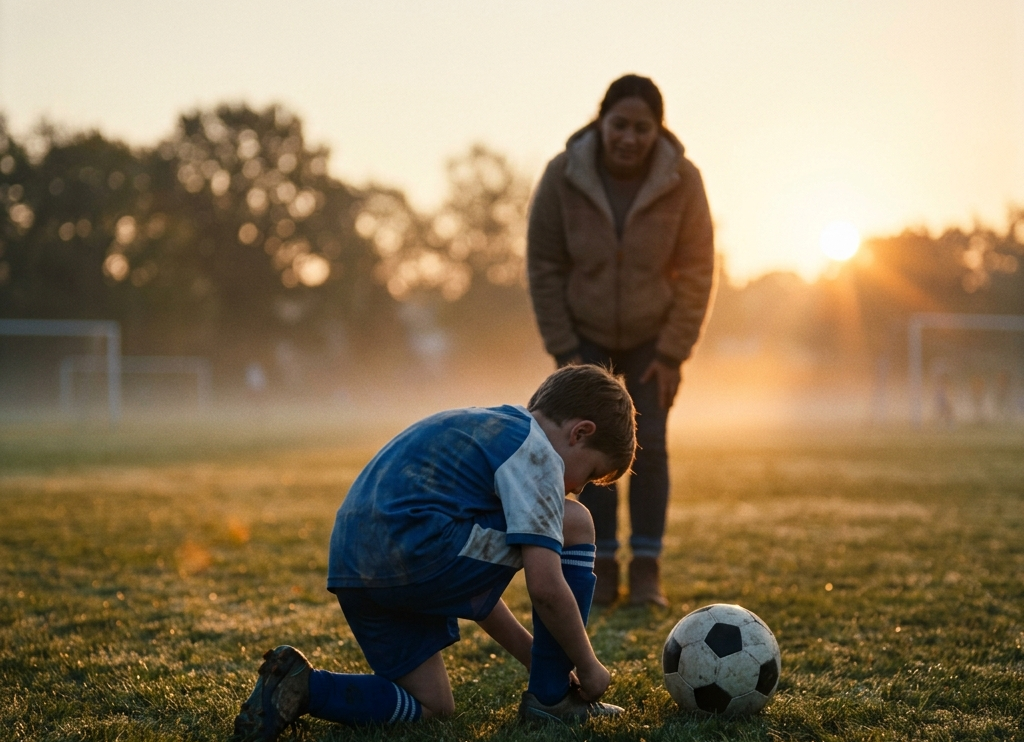
The first sentence after a game often determines whether a child will want to talk or shut down and stay silent. In that moment, more than a performance analysis, a missed goal, or an error, a child needs a safe space to process their emotions and impressions in peace.
What helps is asking about their experience: how they felt during the game, what was difficult, or if they had fun at any point. This gives the child room to describe what happened in their own words, instead of defending the result. A parent who listens before commenting builds trust, which makes tougher conversations later on – such as about injury or a drop in form – much easier. Children need support, love, and security from their parents regardless of how they played; leave the game analysis to the coach. Next time you pick up your child, try staying quiet and see if they start the conversation first.
When sports become a burden
The sign that something has changed is rarely dramatic. A child who used to live for training suddenly makes up excuses not to go, complains of fatigue that was never mentioned before, or stops talking about sports altogether, even if it was all they talked about previously. Behind what looks like laziness from the outside, there is usually built-up pressure, turning sports from a source of joy into a source of burden.
In that moment, a conversation is needed: ask the child what they would change, how they feel at practice, and what they need to start enjoying it again. Sometimes the solution is a weekend off from competition, sometimes a talk with the coach about the workload, and sometimes a change of club. Sports should remain a lifestyle, something to be carried and nurtured through the years.
Frequently asked questions from parents
How many training sessions a week is too many for a ten-year-old?
There is no universal number, as it depends on the sport, school commitments, and the child’s energy outside of practice. A more reliable signal than the number of hours is the child’s mood before and after practice over a longer period.
My child lost and is crying, what should I say?
In the first few minutes, skip the result entirely. Space for emotions, a hug, or silence is enough, and talking about the game can wait until tomorrow.
Should I attend every practice and competition?
How often you are present matters less than what your child feels when you are. Support without commenting on technique or refereeing is worth more than 100% attendance. Check with your child if they want you in the stands and let them know they can be honest with you, whatever their answer may be.
When is it time to talk to a sports psychologist?
When you notice that a change in your child’s attitude toward sports lasts for several weeks or stretches into months without passing on its own. If your child is reluctant to talk to you about it, they might find it easier to open up to a sports psychologist. Normalize this step: elite athletes like Ante Budimir, Ivan Cvetko, Šimun Mikolčić, or Stipe Biuk also work openly on the mental side of the game.
Conclusion
A child most needs a parent who knows when to be silent, when to hug, and how to distinguish training fatigue from pressure fatigue. Children do not need a parent who acts as a coach or game analyst. If you notice that talking about sports in your household is becoming increasingly difficult, schedule a talk with someone from our team.