
When we talk about young athletes, one of the greatest difficulties they face is dealing with pressure and the expectations of others. Very often, we are unaware of how much our words and behaviors affect children and, no matter how good our intentions may be, we can cause a great deal of harm.
The Pressure of High Expectations
Most young athletes want to present themselves in a positive light, and what others think of them matters deeply, especially parents, coaches, and friends/teammates. Sometimes, they unconsciously create the pressure of high expectations for themselves. Children want others to be proud of them and often believe that the only way they can make someone proud is precisely through good results and performances. Whether we want to admit it to ourselves or not, we have often confirmed this assumption of theirs through our own reactions. Ask yourself how many times you have congratulated your child on a scored goal, a basket, or a personal record, and praised them exclusively based on performance.

Support or Pressure at Competitions
Sometimes, in our desire to provide as much support as possible, we also make a mistake and increase the pressure. How many times have you invited a relative or friend to come watch your child during a competition? With such a large audience, a child may assume that they must perform everything perfectly, otherwise they will disappoint all of you. You might not have implied anything of the sort, but that does not mean such thoughts cannot form in their little heads. Next time, ask the child first if they want someone to come watch them, and only then send out the “invitations.”

Talking to Your Child After a Competition
Another thing that would be good to avoid is talking about the competition on the way home—especially discussing mistakes, and particularly if the child does not initiate the conversation themselves. If you constantly direct their focus toward mistakes, you unconsciously foster negative perfectionism, and the child begins to think in a way that mistakes must be avoided. In their minds, a perfect performance becomes the only thing that is good enough, which is also impossible. Instead, praise their effort and dedication, and leave the talk about technical matters to the coach.

Parental Behavior During Competitions
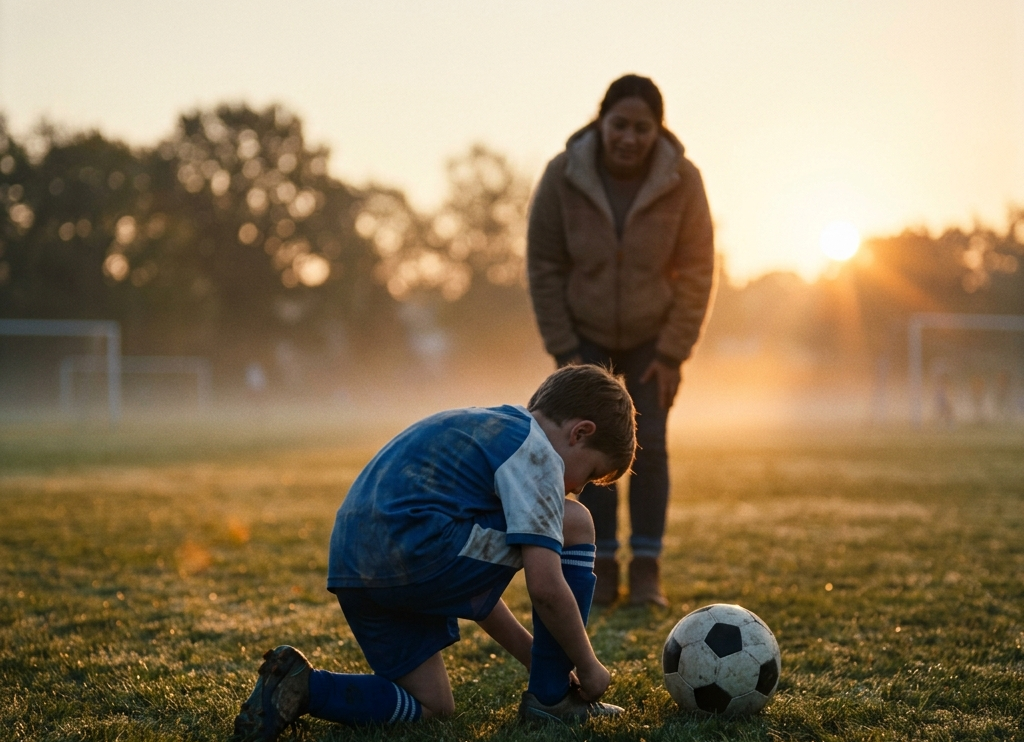
Aside from communication before and after a competition, behavior during the actual event is also highly important. Sometimes body language can leave an even greater impression on children than words. During competitions, children often look for their parents in the audience to feel supported. Think about how often you roll your eyes or show disappointment after your child makes a mistake. Have you shaken your head when they didn’t succeed at something? We are often unaware of these things, yet they can have a massive impact on children and their self-confidence. Become aware of your own nonverbal communication, perhaps by asking your partner to observe your behavior while you watch the game.
Communicating with a Child Athlete
Through conversations with children, guide them to focus on themselves, on a high level of effort, and primarily on enjoying the sport. Avoid phrases like “the coach will get mad if you play poorly” or “score 3 goals for dad today,” which leave the impression that other people’s expectations are what matters most. Help them feel safe, and mention their strengths to them right before the competition. Remind them why they started playing sports in the first place and everything they gain from it. Keep a smile on your face when you are by your child’s side at the field, because that is how everyone will get the best out of the experience!